When to request an inspection
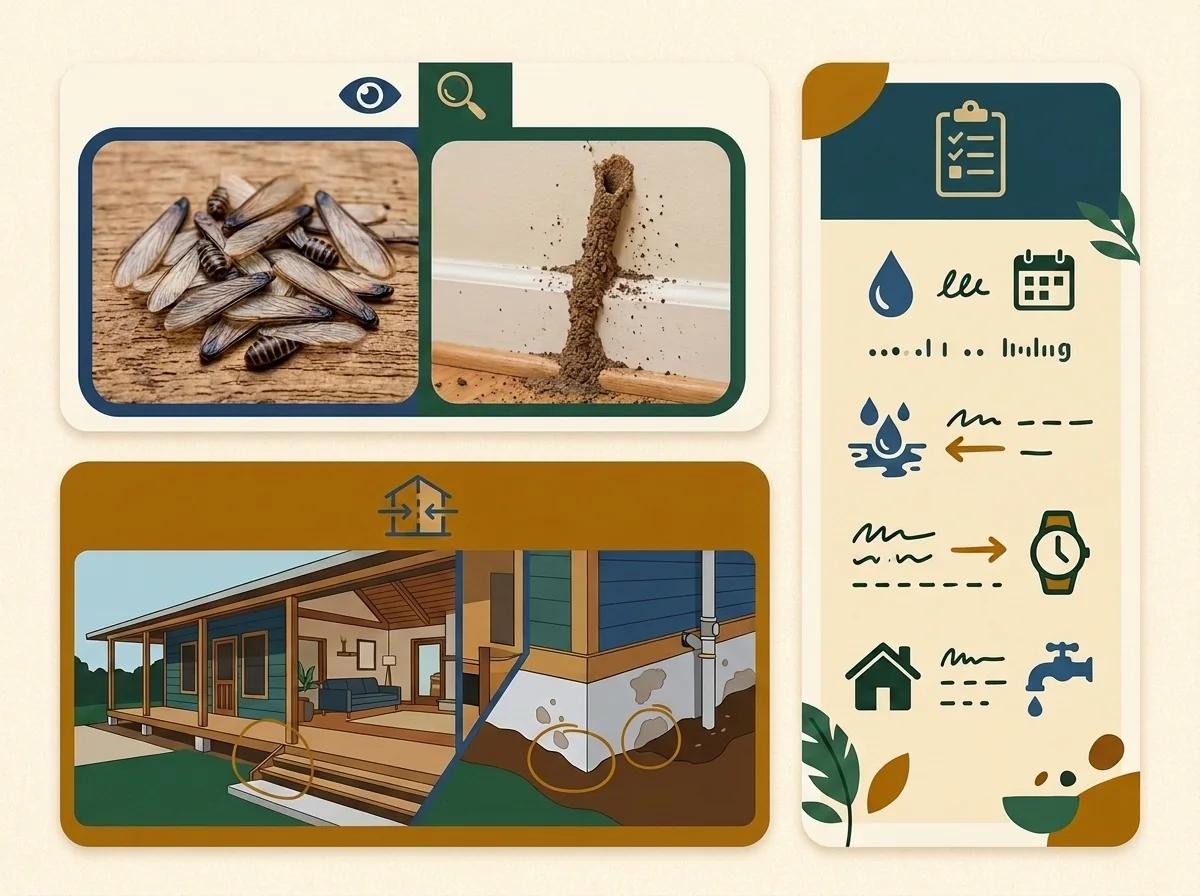
Ask for an inspection when you see swarmers, discarded wings, mud tubes, hollow wood, damaged trim, bubbling paint, stuck doors, or pellet-like frass. In Pensacola, the first clue often shows up after warm, humid weather or around porch lights and windows.
An inspection also makes sense before buying or selling, renewing a termite bond, repairing a porch or garage wall, replacing flooring, or dealing with storm damage that changed moisture around your home. A WDO report for a real estate deal is different from a treatment estimate, so ask which report you are getting and which areas were left unchecked.
Why Pensacola inspections need a local eye
Gulf Coast humidity, frequent rain, mature trees, older porches, slab additions, crawlspace pockets, irrigation, mulch, and storm debris can all hide access points. Native subterranean termites usually enter from soil, so the inspection should slow down around slab edges, garage walls, expansion joints, plumbing penetrations, porch posts, crawlspace piers, and places where mulch or soil covers the inspection gap.
Older East Hill, North Hill, and downtown-area homes may have wood porches, additions, and mature roots that deserve extra attention. Newer slab homes often need a close look at garage joints, utility penetrations, irrigation, and dense foundation plantings.
What happens after the inspection
Ask whether the evidence looks active, old, moisture-related, or serious enough for further evaluation. Then ask which termite type is suspected: native subterranean, Formosan subterranean, or drywood. That answer shapes the treatment plan, warranty conversation, and follow-up.