Moisture keeps the risk alive
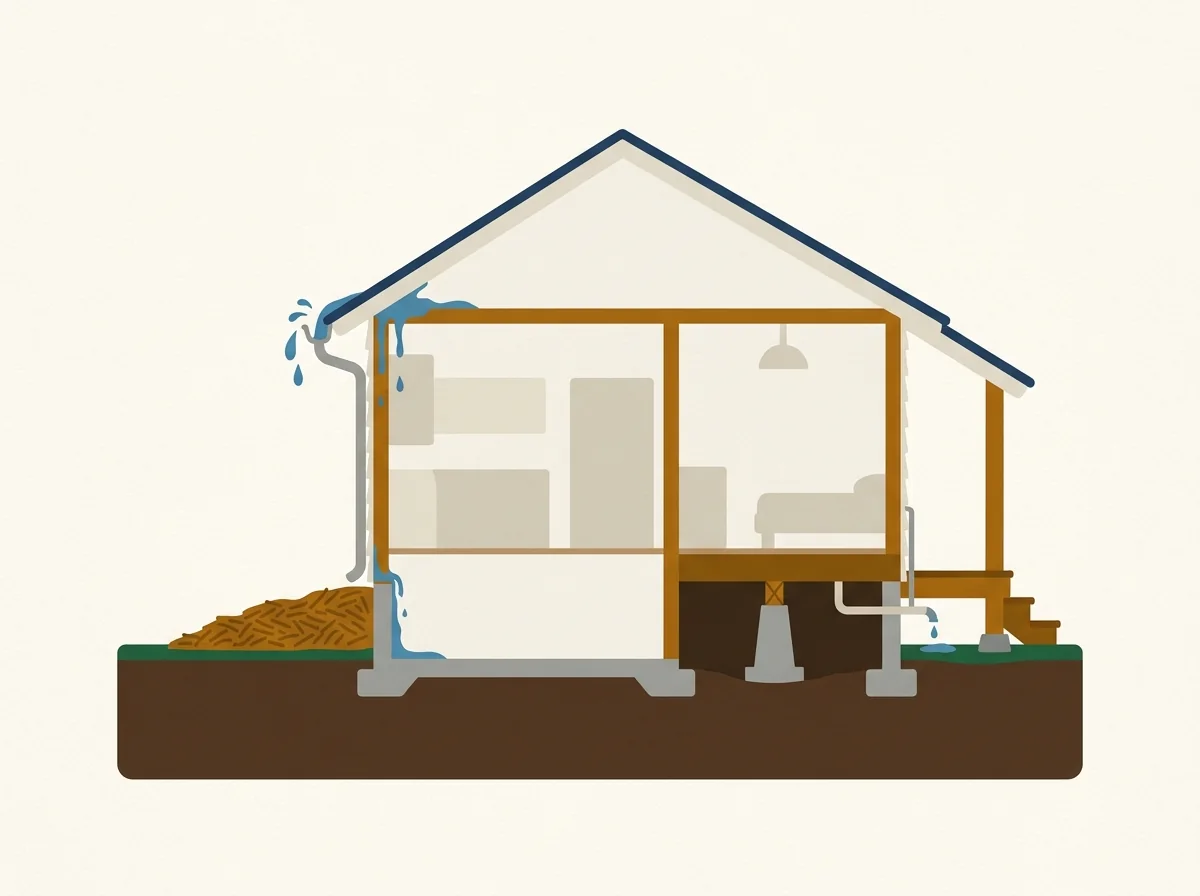
Gulf rain, AC condensate, irrigation, grading, and gutter problems can keep wood and soil conditions termite-friendly.

Pensacola termite control help
Swarmers by a window, wings on a sill, mud tubes near your slab, or trim that suddenly feels soft can turn into an urgent question fast. Gulf Wood Guard helps you organize the clues, ask better inspection questions, and move toward the right treatment conversation for your home.
Gulf Wood Guard helps organize termite details and may route requests to a local termite-control provider. The responding provider handles inspection, pricing, scheduling, license and insurance questions, treatment, warranties, and workmanship.
Why termites stay active here
Warm rain, irrigation, clogged gutters, mulch against siding, storm debris, old stumps, and wood touching soil can all create an opening. Even a tidy yard can have one damp corner that deserves attention.
Gulf rain, AC condensate, irrigation, grading, and gutter problems can keep wood and soil conditions termite-friendly.
Expansion joints, garage edges, plumbing penetrations, patios, and concrete seams can be part of the access story.
Porches, crawlspaces, additions, mature roots, soffits, and old framing may need slower inspection than one visible spot.
Subterranean termites often connect soil to structure; Formosan colonies can be persistent and deserve species-aware planning.
Where to look first
Take a close photo and a wider photo before cleaning up wings, mud tubes, frass, or damaged trim. Note the room, outside wall, foundation edge, porch, garage corner, crawlspace, or slab joint where it showed up.
If you are buying, selling, or dealing with a termite bond, ask whether a WDO inspection, renewal inspection, or treatment estimate is the right next step.
Inspection, treatment, prevention
Sort out whether the clues point to subterranean termites, Formosan termites, drywood termites, flying ants, moisture damage, or something else.
Review inspection helpTreatment might mean liquid soil work, trenching, drilling, bait stations, localized wood treatment, or a fumigation discussion for some drywood cases. The method should fit the finding.
Compare treatment questionsLower the odds with better drainage, working gutters, mulch clearance, dry firewood storage, trimmed vegetation, and regular checkups where they make sense.
Check common termite questionsA transparent handoff
Good termite work starts with what was found, where it may be getting in, which species may be involved, and what moisture or access condition is helping it along.
Tell us about wings, swarmers, mud tubes, soft wood, frass, WDO paperwork, or a bond question.
Location, timing, moisture, foundation style, and photos help shape a clearer conversation.
Ask the provider about license and insurance details, inspection findings, pricing, scheduling, treatment method, and warranty terms.
Decision guides
See what swarmers, wings, mud tubes, frass, damaged trim, and moisture clues can mean in a Pensacola home.
Read the signs guideSee why species, foundation access, drilling, bait stations, warranty terms, and drywood activity can change the quote.
Review cost factorsGet plain answers about swarm season, mud tubes, DIY limits, termite bonds, and Formosan termites.
Visit the FAQ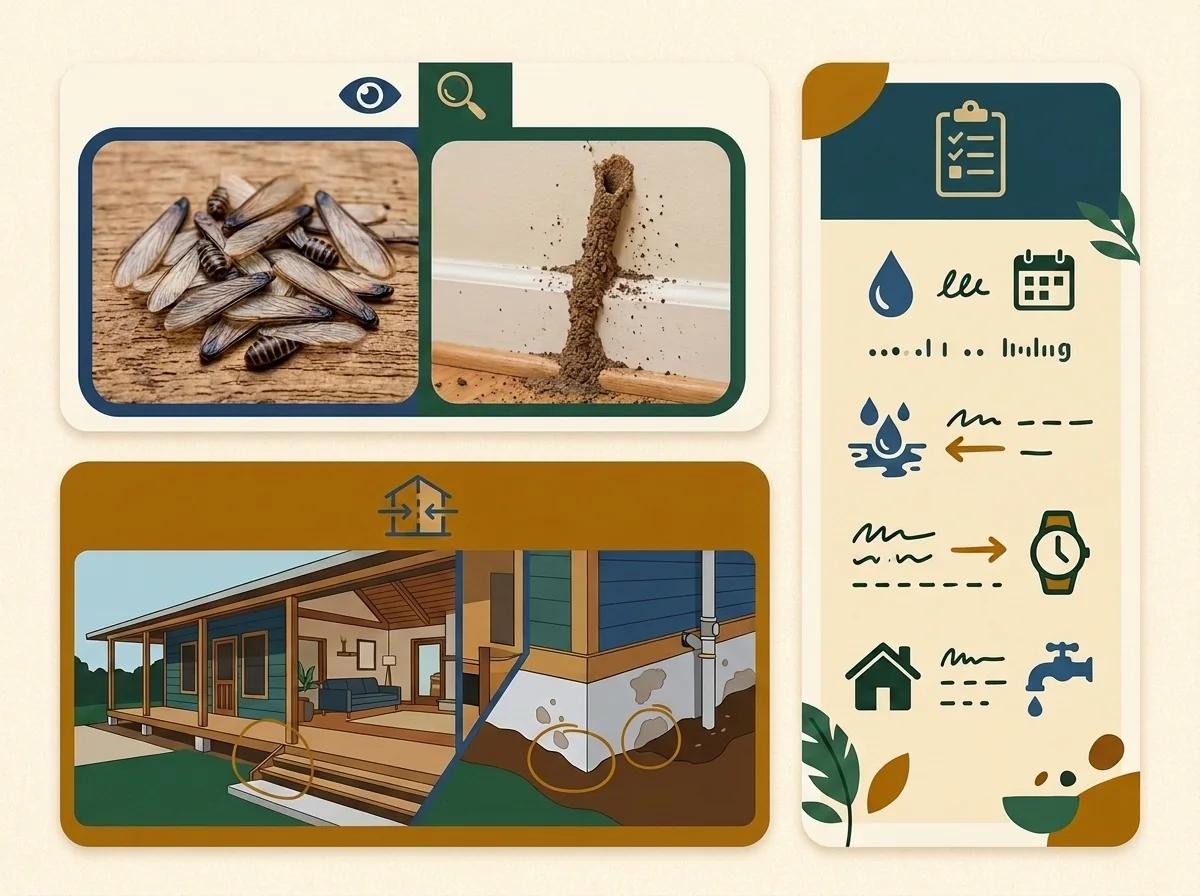
Useful details beat guesswork
If wood looks damaged, tell us where it is, when you noticed it, and whether moisture, leaks, crawlspace access, porch framing, garage edges, or slab joints are nearby. Specific details help shape the right inspection conversation.
Before approving work, ask for the suspected species, the active-versus-old finding, the written method, and the warranty or bond terms that apply to your home.
Ready when you are
Describe the signs, location, timing, and photos so your inspection or treatment quote request starts with the right facts.