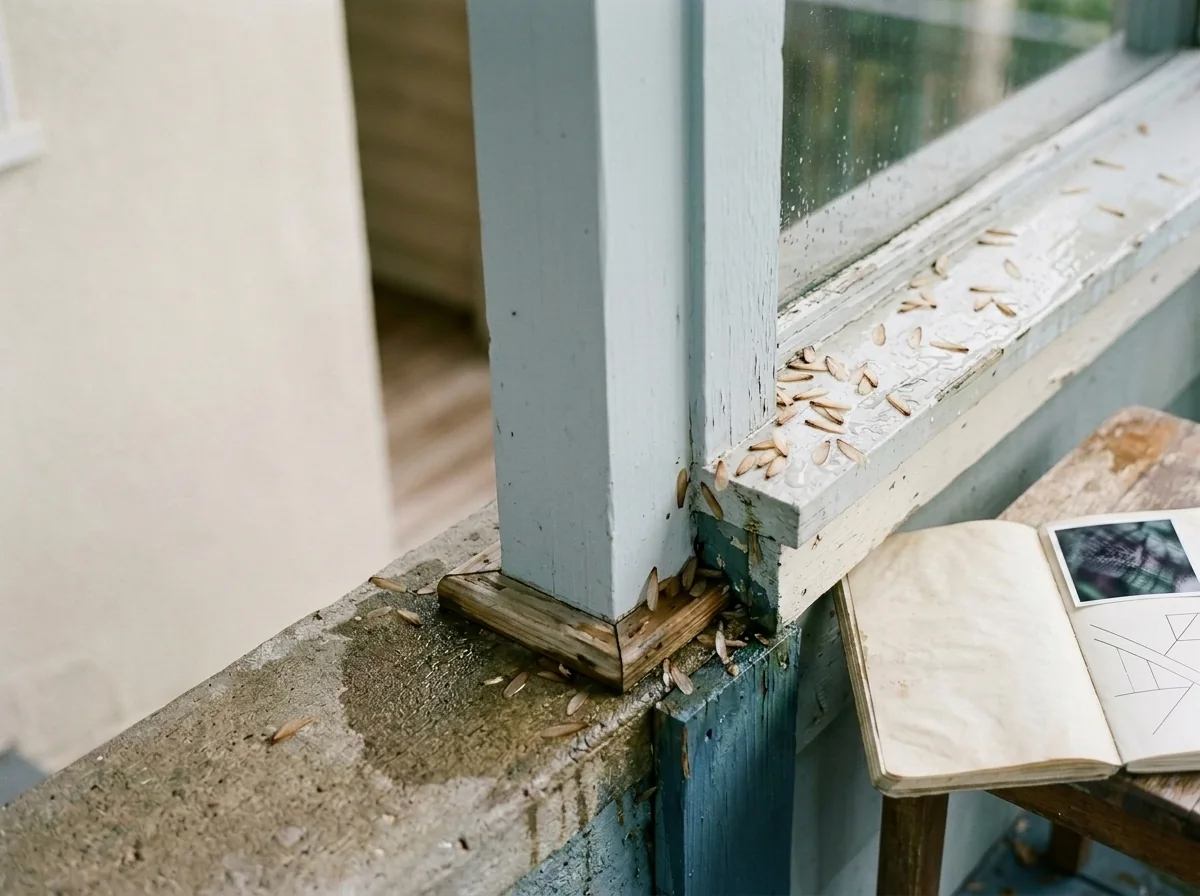
Swarmers and discarded wings
Flying termite swarmers can look like flying ants at first glance. Termite swarmers usually have straight antennae, a thicker waist, and four wings of similar length. In Pensacola, people often notice them near windows, porch lights, doors, and bright indoor fixtures.
Discarded wings are worth documenting, especially when they appear indoors or keep showing up in the same spot. Take close photos before you clean everything up.
Mud tubes
Subterranean termites build mud tubes to move between soil and wood while holding moisture. Check foundation walls, slab edges, garage corners, crawlspace piers, porch posts, expansion joints, and plumbing penetrations. A tube tells one part of the story and gives you a clear reason to schedule an inspection.
Frass, soft trim, and hollow wood
Pellet-like frass can point toward drywood termite activity. Soft baseboards, blistered paint, hollow-sounding trim, bubbling drywall, or doors that suddenly stick can also be clues. Moisture damage, rot, ants, and old damage can look similar, so identification matters.
Moisture clues around your home
Termites are more likely when moisture and wood access overlap. Watch for clogged gutters, AC condensate lines, irrigation spraying the wall, mulch against siding, stacked firewood, porch leaks, crawlspace dampness, old stumps, and soil covering the inspection gap along the slab.